Vitamin D Deficiency Symptoms Vitamin D is one of the most important nutrients for maintaining overall health. It plays a vital role in bone strength, immune function, muscle health, and calcium absorption. Despite its importance, vitamin D deficiency has become increasingly common worldwide due to modern lifestyles, limited sun exposure, and poor dietary habits.
Many people experience vitamin D deficiency without realizing it because the symptoms often develop gradually. If left untreated, low vitamin D levels can lead to serious health problems, including weak bones, muscle weakness, and a weakened immune system.
In this article, we will discuss the symptoms of vitamin D deficiency, its causes, risk factors, treatment options, and practical prevention tips.
Table of Contents
- What Is Vitamin D?
- What Is Vitamin D Deficiency?
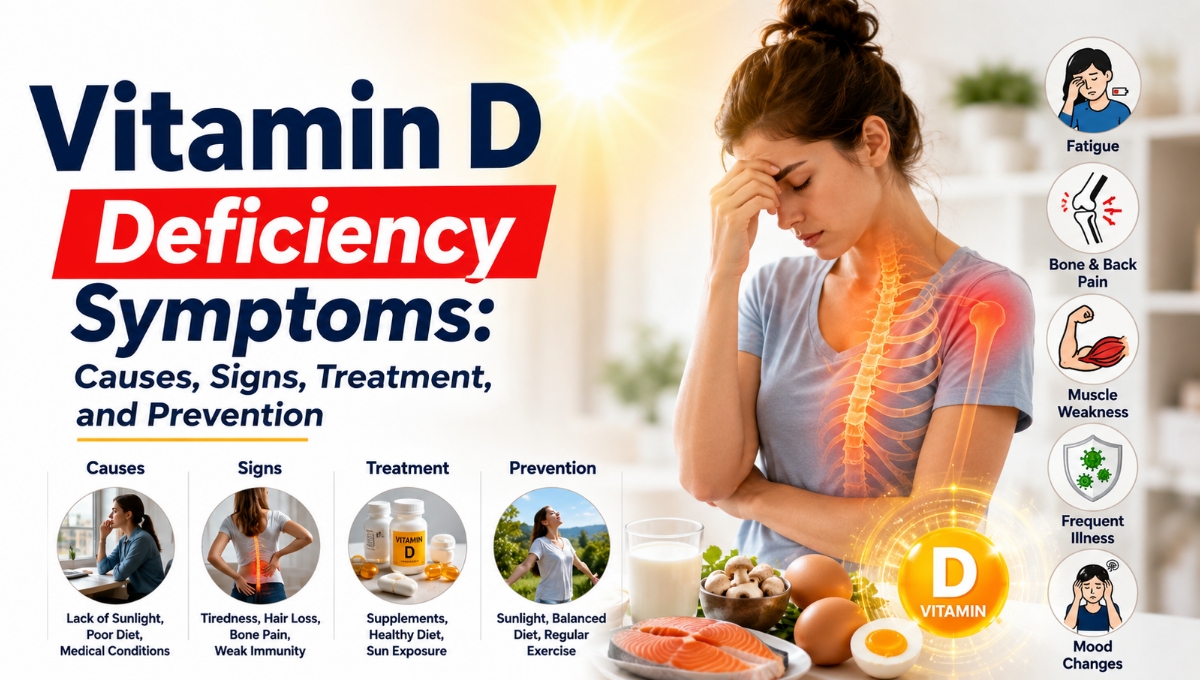
- Common Symptoms of Vitamin D Deficiency
- Causes of Vitamin D Deficiency
- Health Risks Associated with Low Vitamin D
- Diagnosis and Testing
- Treatment Options
- Best Food Sources of Vitamin D
- Prevention Tips
- Frequently Asked Questions
- Conclusion
What Is Vitamin D? Vitamin D Deficiency Symptoms
Vitamin D is a fat-soluble vitamin that helps the body absorb calcium and phosphorus, two minerals essential for strong bones and teeth. It also supports the immune system, nervous system, and muscle function.
The body naturally produces vitamin D when the skin is exposed to sunlight. It can also be obtained through certain foods and dietary supplements.
Main Sources of Vitamin D
Sunlight
Sun exposure is the most natural source of vitamin D.
Food Sources Vitamin D Deficiency Symptoms
- Fatty fish (salmon, tuna, mackerel)
- Egg yolks
- Fortified milk
- Cheese
- Mushrooms
Supplements Vitamin D Deficiency Symptoms
Vitamin D supplements may be recommended for people with low levels.
What Is Vitamin D Deficiency?
Vitamin D deficiency occurs when the body does not have enough vitamin D to function properly.
Healthcare professionals generally classify vitamin D levels as:
- Deficient: Less than 20 ng/mL
- Insufficient: 20–29 ng/mL
- Sufficient: 30 ng/mL or higher
Common Symptoms of Vitamin D Deficiency
Many people do not notice symptoms immediately. However, as the deficiency becomes more severe, several signs may appear.
1. Constant Fatigue and Tiredness
One of the most common symptoms of vitamin D deficiency is persistent fatigue.
Signs of Fatigue
- Low energy levels
- Feeling exhausted throughout the day
- Difficulty concentrating
2. Bone and Back Pain
Vitamin D helps maintain bone health. A deficiency may lead to chronic pain in the bones and joints.
Common Areas Affected
- Lower back
- Hips
- Legs
- Joints
3. Muscle Weakness
Low vitamin D levels can affect muscle strength and coordination.
Symptoms
- Difficulty climbing stairs
- Reduced physical performance
- Increased risk of falls
4. Frequent Illness or Infections
Vitamin D plays a crucial role in supporting the immune system.
Possible Issues Vitamin D Deficiency Symptoms
- Frequent colds
- Respiratory infections
- Slower recovery from illness
5. Hair Loss
Severe vitamin D deficiency may contribute to excessive hair shedding and thinning.
6. Mood Changes and Depression
Research suggests a possible link between low vitamin D levels and mood disorders.
Common Emotional Symptoms
- Sadness
- Anxiety
- Irritability
- Lack of motivation
7. Slow Wound Healing
People with low vitamin D may notice that cuts, bruises, or wounds take longer to heal.
8. Weak Bones and Increased Fracture Risk
Long-term vitamin D deficiency can weaken bones and increase the risk of fractures.
Causes of Vitamin D Deficiency
Limited Sun Exposure
People who spend most of their time indoors are at higher risk.
Poor Diet
A diet lacking vitamin D-rich foods can contribute to deficiency.
Obesity Obesity
Vitamin D may become trapped in body fat, reducing its availability.
Aging
Older adults have a reduced ability to produce vitamin D from sunlight.
Medical Conditions
Certain digestive disorders can interfere with vitamin D absorption, including:
- Crohn’s disease
- Celiac disease
- Liver disease
Health Risks of Vitamin D Deficiency
In Children
- Rickets
- Delayed growth
- Bone deformities
In Adults
- Osteomalacia
- Osteoporosis
- Chronic bone pain
In Older Adults
- Increased fall risk
- Fractures
- Reduced mobility
Diagnosis and Testing
The most accurate test for vitamin D deficiency is the:
25-Hydroxy Vitamin D Blood Test Vitamin D Deficiency Symptoms
This test measures the amount of vitamin D circulating in the bloodstream. Vitamin D Deficiency Symptoms
Treatment Options
Increase Sun Exposure
Spend 15–30 minutes in sunlight several times a week.
Eat Vitamin D-Rich Foods
Include:
- Fatty fish
- Eggs
- Fortified dairy products
- Mushrooms
Take Supplements Vitamin D Deficiency Symptoms
Consult a healthcare professional before taking vitamin D supplements.
Prevention Tips
Maintain a Balanced Diet
Consume foods rich in vitamin D regularly.
Stay Active Outdoors
Outdoor activities increase natural sun exposure. Vitamin D Deficiency Symptoms
Get Regular Health Checkups
Routine testing can help identify deficiencies early. Vitamin D Deficiency Symptoms
Conclusion
Vitamin D deficiency is a common health concern that can affect people of all ages. Symptoms such as fatigue, muscle weakness, bone pain, and frequent infections should not be ignored. The good news is that vitamin D deficiency can often be prevented and treated through proper nutrition, adequate sunlight exposure, and medical guidance. Maintaining healthy vitamin D levels is essential for strong bones, a healthy immune system, and overall well-being.
Frequently Asked Questions (FAQ)
1. What are the first signs of vitamin D deficiency?
Fatigue, muscle weakness, and bone pain are among the earliest symptoms.
2. How much sunlight is needed for vitamin D production?
Most people need about 15–30 minutes of sunlight several times a week.
3. Can vitamin D deficiency cause hair loss?
Yes, severe deficiency may contribute to hair thinning and hair loss.
4. Which foods are rich in vitamin D?
Fatty fish, egg yolks, fortified milk, and mushrooms are good sources.
5. How is vitamin D deficiency diagnosed?
A blood test called the 25-Hydroxy Vitamin D test is used.
6. Can vitamin D deficiency affect mood?
Yes, low vitamin D levels have been linked to depression and mood changes.
7. Who is most at risk of deficiency?
Older adults, people with limited sun exposure, and individuals with digestive disorders.
8. Can supplements help?
Yes, but they should be taken under medical supervision.
9. Is vitamin D important for immunity?
Absolutely. Vitamin D supports healthy immune system function.
10. Can vitamin D deficiency be cured?
In most cases, yes. Proper treatment and lifestyle changes can restore healthy levels.
Vitamin D Deficiency Symptoms.
Also Read
Diabetes Diet Plan for Beginners: A Complete Guide to Healthy Blood Sugar Management
Health Insurance Policy: Everything You Need to Know
Healthy Lifestyle Habits for Beginners: A Simple Guide to Better Health