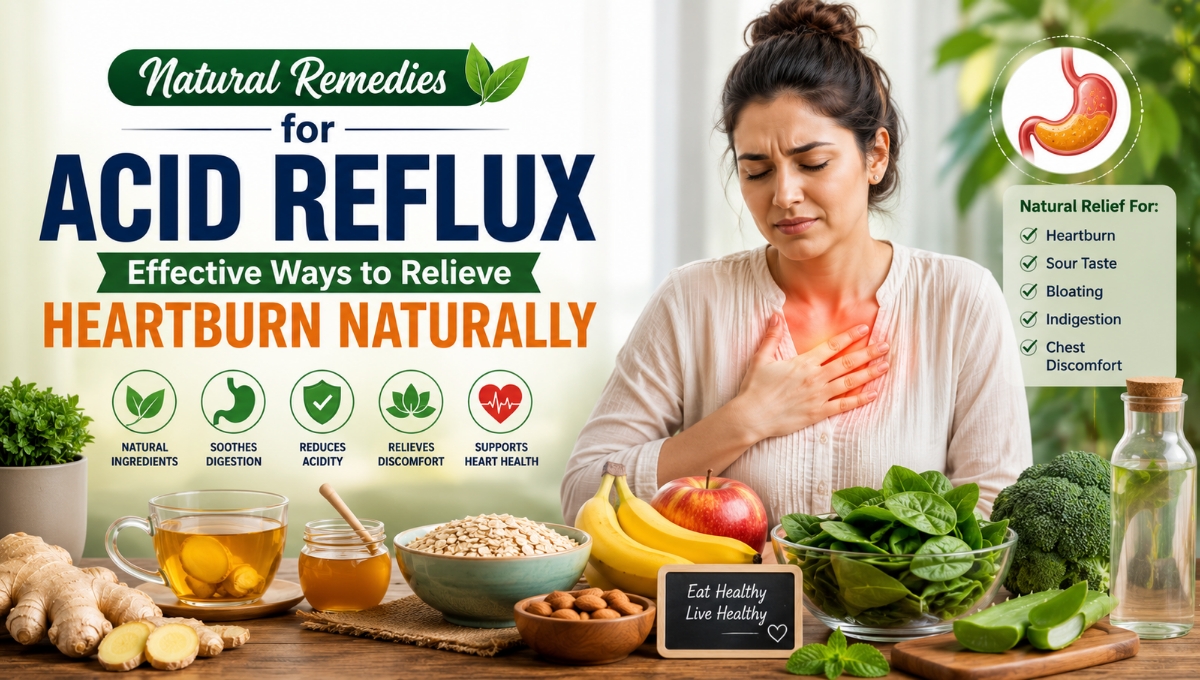
Natural Remedies for Acid Reflux:
Acid reflux is a common digestive problem that affects millions of people worldwide. It happens when stomach acid flows back into the esophagus, causing symptoms such as heartburn, chest discomfort, a sour taste in the mouth, bloating, and difficulty swallowing. While occasional acid reflux is normal, frequent episodes can affect your daily life and may require medical attention.
Many people look for Natural Remedies for Acid Reflux to manage their symptoms without relying entirely on medication. Healthy eating habits, lifestyle changes, and simple home remedies can help reduce acid reflux and support better digestive health.
In this guide, you’ll discover the best Natural Remedies for Acid Reflux, foods to eat and avoid, lifestyle tips, and prevention strategies for long-term relief.
What Is Acid Reflux?
Acid reflux occurs when the lower esophageal sphincter (LES), a muscle between the stomach and esophagus, becomes weak or relaxes at the wrong time. This allows stomach acid to move upward into the esophagus, causing irritation.
If acid reflux happens frequently, it may develop into Gastroesophageal Reflux Disease (GERD), which should be evaluated by a healthcare professional.
Common Symptoms of Acid Reflux
Symptoms may include:
- Burning sensation in the chest (heartburn)
- Sour or bitter taste in the mouth
- Difficulty swallowing
- Frequent burping
- Bloating
- Nausea
- Dry cough, especially at night
- Sore throat
- Hoarseness
Recognizing these symptoms early can help you take the right steps toward relief.
Causes of Acid Reflux
Several factors can contribute to acid reflux, including:
- Overeating
- Eating spicy or fatty foods
- Obesity
- Smoking
- Alcohol consumption
- Pregnancy
- Eating late at night
- Stress
- Lack of physical activity
Understanding these causes is the first step in finding effective Natural Remedies for Acid Reflux.
Best Natural Remedies for Acid Reflux
1. Eat Smaller Meals
Large meals increase pressure on the stomach and make acid reflux more likely. Instead of three heavy meals, try eating five or six smaller meals throughout the day.
2. Stay Upright After Eating
Avoid lying down immediately after meals. Wait at least 2–3 hours before sleeping to reduce the risk of acid flowing back into the esophagus.
3. Drink Enough Water
Water supports digestion and may help reduce irritation. Sip water throughout the day rather than drinking large amounts during meals.
4. Eat More Fiber
High-fiber foods support healthy digestion and help keep your stomach functioning properly.
Good sources include:
- Oats
- Brown rice
- Whole wheat bread
- Apples
- Pears
- Vegetables
- Lentils
5. Ginger
Ginger has natural anti-inflammatory properties and may help reduce nausea and digestive discomfort.
Enjoy ginger as:
- Ginger tea
- Fresh ginger in meals
- Ginger water
6. Oatmeal
Oatmeal is easy to digest and rich in fiber. It is an excellent breakfast choice for people experiencing acid reflux.
7. Bananas
Bananas are naturally low in acid and may help soothe the stomach lining.
8. Aloe Vera Juice
Some people find that small amounts of food-grade aloe vera juice may soothe irritation. Choose products specifically labeled for internal use and consult a healthcare professional if you have any concerns.
9. Maintain a Healthy Weight
Excess body weight increases pressure on the stomach, making reflux more common. Losing even a small amount of weight may reduce symptoms.
10. Manage Stress
Stress does not directly cause acid reflux, but it can worsen symptoms.
Helpful stress-management techniques include:
- Meditation
- Yoga
- Deep breathing
- Walking
- Reading
Foods That Help Reduce Acid Reflux
Include these foods in your daily diet:
- Oatmeal
- Bananas
- Apples
- Melons
- Green vegetables
- Broccoli
- Spinach
- Brown rice
- Whole grains
- Yogurt (if tolerated)
- Ginger
- Lean chicken
- Fish
These foods support digestion and are generally less likely to trigger reflux.
Foods to Avoid
Certain foods commonly trigger acid reflux symptoms.
Try limiting:
- Fried foods
- Spicy foods
- Chocolate
- Coffee
- Carbonated drinks
- Alcohol
- Citrus fruits
- Tomato-based sauces
- Onion
- Garlic (for some people)
- Mint
- Processed snacks
Keeping a food diary can help identify your personal triggers.
Healthy Lifestyle Tips
Simple daily habits can make a big difference.
- Eat slowly and chew food well.
- Avoid overeating.
- Wear loose-fitting clothes.
- Stay physically active.
- Avoid smoking.
- Limit alcohol.
- Sleep with your head slightly elevated if nighttime reflux is a problem.
- Avoid eating just before bedtime.
These habits work well alongside other Natural Remedies for Acid Reflux.
Can Exercise Help?
Yes. Moderate exercise supports digestion and healthy weight management Natural Remedies for Acid Reflux:
Recommended activities include:
- Walking
- Cycling
- Swimming
- Yoga
- Light stretching
Avoid vigorous exercise immediately after meals.
When Should You See a Doctor?
Natural remedies may help occasional acid reflux, but seek medical advice if:
- Symptoms occur more than twice a week.
- Difficulty swallowing develops.
- You experience unexplained weight loss.
- Heartburn is severe or persistent.
- You notice blood in vomit or stool.
- Chest pain is severe or accompanied by shortness of breath.
These symptoms require prompt medical evaluation.
Frequently Asked Questions (FAQs)
1. Can acid reflux be cured naturally?
Healthy lifestyle changes and natural remedies can help control symptoms, but persistent reflux should be assessed by a healthcare professional.
2. Which foods are best for acid reflux?
Oatmeal, bananas, leafy vegetables, whole grains, ginger, and lean proteins are commonly well tolerated.
3. Is drinking water good for acid reflux?
Yes. Staying hydrated supports digestion, although water alone does not cure acid reflux.
4. Does stress make acid reflux worse?
Stress may increase the frequency or severity of symptoms in some people, making stress management beneficial.
5. Can losing weight improve acid reflux?
Yes. Maintaining a healthy weight can reduce pressure on the stomach and improve symptoms for many people.
Conclusion
Using Natural Remedies for Acid Reflux is a safe and practical way to support digestive health. Eating balanced meals, choosing fiber-rich foods, maintaining a healthy weight, staying hydrated, managing stress, and avoiding trigger foods can significantly reduce acid reflux symptoms.
Remember that natural remedies work best when combined with healthy lifestyle habits. If your symptoms are frequent, severe, or worsening, consult a qualified healthcare professional for proper diagnosis and treatment. Small daily changes can make a big difference in protecting your digestive health and improving your quality of life.
Natural Remedies for Acid Reflux
Discover the best Natural Remedies for Acid Reflux with effective home remedies, healthy foods, lifestyle tips, and prevention strategies to relieve heartburn naturally and improve digestive health. Natural Remedies for Acid Reflux