Heart disease is one of the leading causes of death worldwide, but the good news is that many heart problems can be prevented or treated successfully when detected early. Unfortunately, many people ignore the initial warning signs because they appear mild or are mistaken for common health issues like indigestion or fatigue.
Knowing the Early Signs of Heart Disease can help you seek medical attention at the right time and reduce the risk of serious complications such as heart attack or heart failure. Along with regular health checkups, a healthy lifestyle plays a key role in keeping your heart strong.
In this article, we’ll discuss the most common Early Signs of Heart Disease, possible causes, risk factors, prevention tips, and when you should consult a doctor.
What Is Heart Disease?
Heart disease is a general term used for conditions that affect the heart and blood vessels. It includes coronary artery disease, heart failure, arrhythmias (irregular heartbeat), and heart valve disorders.
Many heart conditions develop slowly over several years. During the early stages, the body often gives warning signals that should never be ignored.
Common Early Signs of Heart Disease
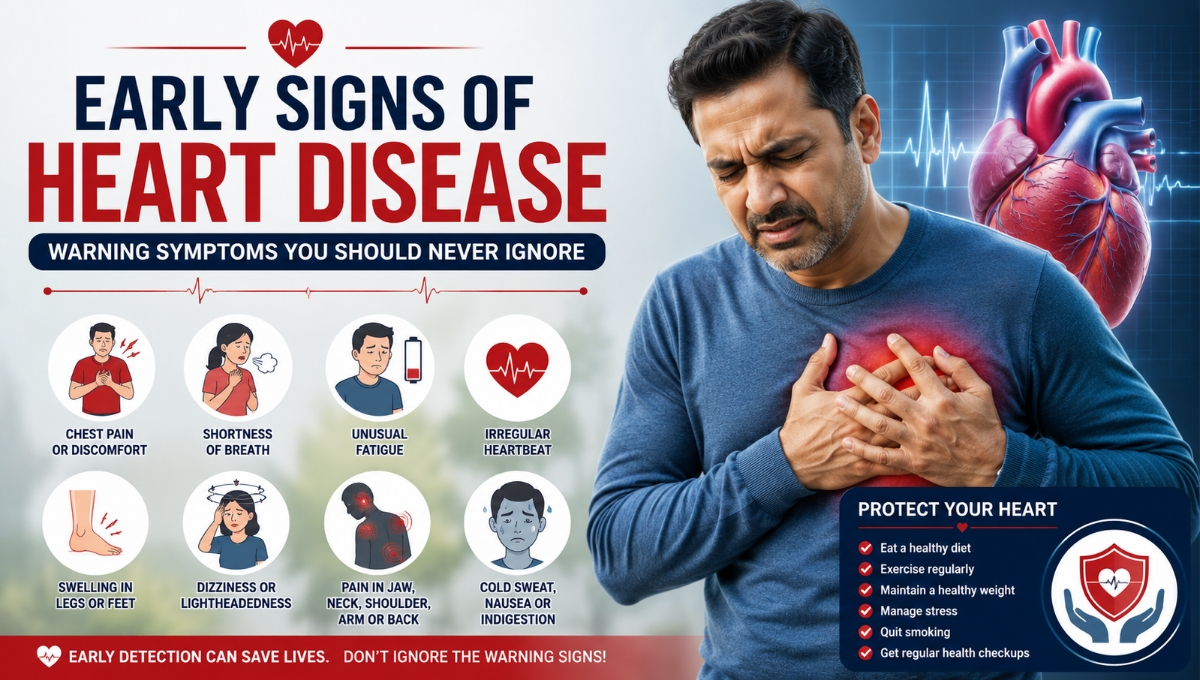
1. Chest Pain or Discomfort
Chest pain is one of the most well-known symptoms of heart disease. It may feel like:
- Pressure
- Tightness
- Burning
- Heaviness
- Squeezing sensation
The discomfort may last for a few minutes or come and go. Any unexplained chest pain should be evaluated by a healthcare professional immediately.
2. Shortness of Breath
If you become breathless while walking, climbing stairs, or doing simple daily activities, it may indicate that your heart is not pumping blood efficiently.
Shortness of breath is one of the important Early Signs of Heart Disease, especially when combined with chest discomfort or fatigue.
3. Unusual Fatigue
Feeling tired after a busy day is normal, but persistent or unexplained fatigue can be an early warning sign.
If routine activities suddenly leave you exhausted, it is worth discussing with your doctor.
4. Irregular Heartbeat
An occasional skipped heartbeat is usually harmless, but frequent palpitations or an irregular heartbeat should not be ignored.
Symptoms include:
- Racing heartbeat
- Fluttering sensation
- Slow heartbeat
- Feeling that the heart is skipping beats
5. Swelling in the Legs or Feet
Poor heart function can cause fluid buildup in the body.
Watch for swelling in:
- Feet
- Ankles
- Legs
This may indicate reduced circulation or heart failure.
6. Dizziness or Fainting
Feeling dizzy without an obvious reason may occur when the heart cannot pump enough blood to the brain.
Repeated dizziness requires medical evaluation.
7. Pain in Other Parts of the Body
Heart-related pain is not always limited to the chest.
Pain may spread to:
- Left arm
- Both arms
- Shoulders
- Neck
- Jaw
- Back
These symptoms should never be ignored.
Risk Factors for Heart Disease
Several factors increase the likelihood of developing heart disease.
These include:
- High blood pressure
- High cholesterol
- Diabetes
- Obesity
- Smoking
- Lack of exercise
- Unhealthy diet
- Chronic stress
- Excessive alcohol consumption
- Family history of heart disease
Managing these risk factors can significantly improve heart health.
How to Protect Your Heart Naturally
Eat a Heart-Healthy Diet
Choose foods such as:
- Fresh fruits
- Green vegetables
- Whole grains
- Oats
- Nuts
- Seeds
- Fish rich in Omega-3
- Olive oil
Limit processed foods, sugary drinks, and excessive salt.
Exercise Regularly
Aim for at least 150 minutes of moderate exercise per week.
Activities include:
- Walking
- Cycling
- Swimming
- Yoga
Regular exercise strengthens the heart and improves blood circulation.
Maintain a Healthy Weight
Being overweight increases the workload on the heart.
Even small weight loss can improve blood pressure and cholesterol levels.
Quit Smoking
Smoking damages blood vessels and significantly increases the risk of heart disease.
Stopping smoking is one of the best decisions you can make for your heart.
Manage Stress
Long-term stress may affect blood pressure and overall heart health.
Helpful techniques include:
- Meditation
- Deep breathing
- Yoga
- Spending time with family
- Quality sleep
When Should You See a Doctor?
Seek immediate medical attention if you experience:
- Severe chest pain
- Difficulty breathing
- Pain spreading to the arm, jaw, or back
- Sudden dizziness or fainting
- Irregular heartbeat with weakness
Early diagnosis can prevent serious complications.
Also Read:- How to Stay Active After 60: A Complete Guide to Healthy and Independent Aging
Frequently Asked Questions (FAQs)
1. What are the first signs of heart disease?
Chest discomfort, shortness of breath, fatigue, irregular heartbeat, and swelling in the legs are common early warning signs.
2. Can young people develop heart disease?
Yes. Poor lifestyle habits, smoking, obesity, diabetes, and family history can increase the risk at a younger age.
3. Can heart disease be prevented?
Many cases can be prevented through healthy eating, regular exercise, avoiding smoking, maintaining a healthy weight, and controlling blood pressure and cholesterol.
4. Is chest pain always related to heart disease?
No. Chest pain can have many causes, but any unexplained or severe chest pain should be evaluated by a healthcare professional.
5. How often should I get my heart checked?
Adults should have regular health checkups, especially if they have high blood pressure, diabetes, high cholesterol, or a family history of heart disease.
Conclusion
Recognizing the Early Signs of Heart Disease can make a significant difference in protecting your health. Symptoms such as chest pain, shortness of breath, unusual fatigue, dizziness, swelling in the legs, and irregular heartbeat should never be ignored.
By adopting a heart-healthy lifestyle, staying physically active, eating nutritious foods, managing stress, and attending regular medical checkups, you can lower your risk of heart disease and enjoy a healthier future. If you notice any warning signs, consult a healthcare professional promptly for proper evaluation and treatment.
SEO-Friendly Permalink
/early-signs-of-heart-disease
Meta Description
Learn the Early Signs of Heart Disease, including chest pain, shortness of breath, fatigue, irregular heartbeat, and prevention tips to protect your heart and improve long-term health.