Preventive Healthcare Benefits Healthcare is often associated with treating illnesses after they occur. However, modern medical experts increasingly emphasize prevention rather than treatment. Preventive healthcare focuses on maintaining good health, identifying potential health risks early, and preventing diseases before they become serious.
In today’s fast-paced world, lifestyle diseases such as diabetes, heart disease, obesity, and high blood pressure are becoming more common. Many of these conditions can be prevented or managed effectively through early detection and healthy lifestyle choices. This is where understanding Preventive Healthcare Benefits becomes extremely important.
Preventive healthcare is not only about avoiding illness—it is about improving quality of life, reducing healthcare costs, and helping individuals live longer, healthier lives.
In this comprehensive guide, we will explore the most important Preventive Healthcare Benefits, why preventive care matters, and how simple health habits can protect your future.
What Is Preventive Healthcare?
Preventive healthcare refers to medical services, screenings, vaccinations, and healthy lifestyle practices designed to prevent diseases before they occur.
Instead of waiting for symptoms to appear, preventive healthcare focuses on identifying risks early and taking action to maintain good health.
Common preventive healthcare measures include:
- Regular health checkups
- Vaccinations
- Health screenings
- Healthy eating habits
- Regular exercise
- Stress management
- Routine medical consultations
These measures help individuals stay healthier and reduce the likelihood of serious medical conditions.
Why Preventive Healthcare Matters
Many serious diseases develop slowly and may not show symptoms during their early stages.
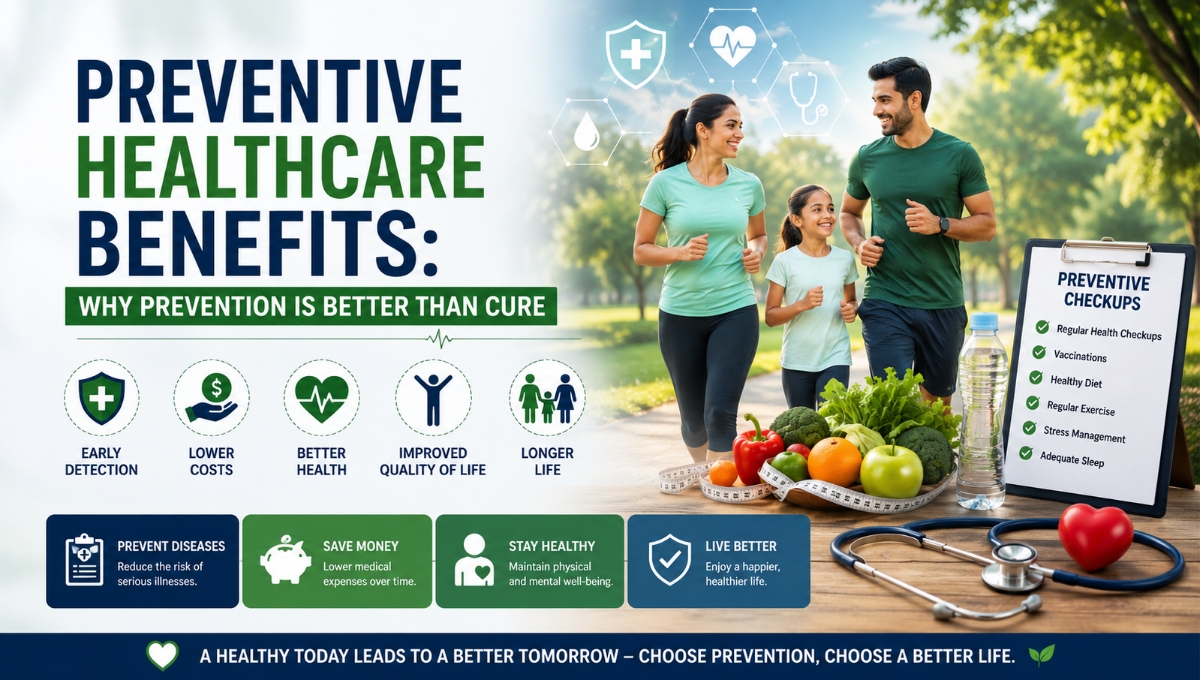
Preventive Healthcare Benefits
Conditions such as:
- Diabetes
- Heart disease
- High blood pressure
- Kidney disease
- Certain cancers
can often be detected early through preventive healthcare.
One of the biggest Preventive Healthcare Benefits is the ability to identify health problems before they become difficult or expensive to treat.
1. Early Detection of Diseases
One of the most important Preventive Healthcare Benefits is early disease detection.
Also Read :- Diabetes Diet Plan for Beginners: A Complete Guide to Healthy Blood Sugar Management
Family Health Insurance Plans in India: Complete Guide to Protecting Your Family
Regular health screenings can identify health issues before symptoms become noticeable.
Examples include:
- Blood sugar testing for diabetes
- Blood pressure monitoring
- Cholesterol screening
- Cancer screenings
Early diagnosis often leads to:
- Better treatment outcomes
- Faster recovery
- Lower medical costs
Early detection can literally save lives.
2. Lower Healthcare Costs
Medical treatment can be expensive, especially when diseases are diagnosed at advanced stages.
Preventive healthcare helps reduce costs by:
- Identifying diseases early
- Reducing hospitalization risks
- Preventing complications
- Minimizing emergency treatments
Among all Preventive Healthcare Benefits, long-term financial savings are particularly valuable.
3. Improved Quality of Life
Good health allows people to enjoy life more fully.
Preventive healthcare supports:
- Better physical health
- Improved mobility
- Increased energy
- Greater independence
Individuals who prioritize prevention often experience a higher quality of life throughout adulthood and old age.
4. Better Management of Chronic Diseases
People with existing health conditions can also benefit from preventive care.
Conditions such as:
- Diabetes
- Asthma
- High blood pressure
- Heart disease
require ongoing monitoring.
Regular checkups help prevent complications and improve disease management.
5. Increased Life Expectancy
Many studies have shown that healthy lifestyle choices and preventive healthcare can contribute to a longer lifespan.
Preventive healthcare encourages habits that reduce the risk of major illnesses.
This makes increased longevity one of the most significant Preventive Healthcare Benefits.
6. Reduced Risk of Heart Disease
Heart disease remains one of the leading causes of death worldwide.
Preventive measures include:
- Blood pressure monitoring
- Cholesterol testing
- Healthy eating
- Exercise
These habits significantly reduce cardiovascular risks.
7. Better Mental Health
Preventive healthcare is not limited to physical health.
Mental wellness is equally important.
Preventive strategies may include:
- Stress management
- Counseling
- Meditation
- Adequate sleep
Mental health support helps reduce anxiety, depression, and burnout.
8. Encourages Healthy Lifestyle Habits
Many people begin making healthier choices after participating in preventive healthcare programs.
Examples include:
- Eating nutritious foods
- Exercising regularly
- Maintaining healthy weight
- Quitting smoking
Healthy habits are among the most practical Preventive Healthcare Benefits.
9. Improved Workplace Productivity
Healthy individuals are often more productive and engaged.
Preventive healthcare can reduce:
- Sick days
- Fatigue
- Medical absences
This benefits both employees and employers.
10. Supports Healthy Aging
As people grow older, preventive healthcare becomes increasingly important.
Regular screenings can help detect:
- Osteoporosis
- Heart disease
- Vision problems
- Hearing loss
Healthy aging is one of the major Preventive Healthcare Benefits for older adults.
Common Preventive Healthcare Services
Preventive healthcare includes various medical services.
Health Screenings
Common screenings include:
- Blood pressure checks
- Blood sugar tests
- Cholesterol testing
- Cancer screenings
Vaccinations
Vaccines help prevent serious infectious diseases.
Examples include:
- Flu vaccines
- Hepatitis vaccines
- COVID-19 vaccines
Routine Physical Examinations
Regular checkups help monitor overall health status.
Preventive Counseling
Healthcare professionals may provide guidance on:
- Nutrition
- Weight management
- Exercise
- Smoking cessation
The Role of Nutrition in Preventive Healthcare
Healthy nutrition plays a major role in disease prevention.
Foods That Support Good Health
- Fruits
- Vegetables
- Whole grains
- Lean proteins
- Healthy fats
These foods help support:
- Heart health
- Immune function
- Weight management
Nutrition is a cornerstone of preventive healthcare.
The Importance of Physical Activity
Exercise is one of the simplest and most effective preventive health strategies.
Benefits include:
- Improved cardiovascular health
- Better blood sugar control
- Stronger muscles and bones
- Weight management
Most adults benefit from at least 150 minutes of moderate physical activity each week.
Stress Management and Preventive Healthcare
Chronic stress can negatively affect both physical and mental health.
Effective stress management techniques include:
Meditation
Helps improve focus and relaxation.
Yoga
Supports flexibility and stress reduction.
Deep Breathing
Can lower stress levels quickly.
Spending Time Outdoors
Improves mood and overall well-being.
Stress reduction is one of the often-overlooked Preventive Healthcare Benefits.
Preventive Healthcare for Children
Preventive care begins early in life.
Important measures include:
- Vaccinations
- Growth monitoring
- Nutritional guidance
- Regular pediatric checkups
Healthy childhood habits often continue into adulthood.
Preventive Healthcare for Adults
Adults should prioritize:
- Annual health checkups
- Blood pressure monitoring
- Diabetes screening
- Cancer screenings
Preventive care helps adults maintain long-term health.
Preventive Healthcare for Seniors
Older adults often require additional screenings and monitoring.
Recommended services may include:
- Bone density testing
- Vision exams
- Hearing tests
- Cardiovascular assessments
Preventive care supports independence and healthy aging.
Challenges in Preventive Healthcare
Despite its benefits, some people avoid preventive care.
Common reasons include:
- Lack of awareness
- Busy schedules
- Cost concerns
- Fear of medical results
Education and awareness can help overcome these barriers.
Simple Daily Habits That Support Preventive Healthcare
Stay Hydrated
Drink enough water throughout the day.
Get Quality Sleep
Aim for 7–9 hours of sleep.
Eat Balanced Meals
Focus on nutrient-rich foods.
Exercise Regularly
Stay physically active.
Avoid Smoking
Smoking increases the risk of many diseases.
Limit Alcohol Consumption
Moderation is important for overall health.
These habits maximize the long-term Preventive Healthcare Benefits.
The Future of Preventive Healthcare
Healthcare technology continues to improve preventive care.
Emerging trends include:
- Telemedicine
- Wearable health devices
- AI-powered health monitoring
- Personalized wellness programs
These innovations make preventive healthcare more accessible and effective.
Why Prevention Is Better Than Cure
Treating advanced diseases is often more difficult, expensive, and stressful than preventing them.
Preventive healthcare allows individuals to:
- Detect problems early
- Avoid complications
- Improve long-term health
- Save money
This is why healthcare professionals strongly advocate preventive care.
Conclusion
The many Preventive Healthcare Benefits make it one of the smartest investments you can make for your future health. Through regular checkups, screenings, healthy eating, exercise, stress management, and other preventive measures, individuals can reduce the risk of serious diseases and enjoy a better quality of life.
Prevention is not about avoiding healthcare—it is about using healthcare wisely before problems become severe. By making preventive healthcare a priority today, you can protect your health, reduce medical expenses, and create a healthier future for yourself and your family.