Diabetes is one of the most common health conditions affecting millions of people worldwide. Managing diabetes requires a combination of healthy eating, regular exercise, proper medication, and lifestyle changes. Among these factors, diet plays the most important role in controlling blood sugar levels.
If you have recently been diagnosed with diabetes, following a proper Diabetes Diet Plan for Beginners can help you maintain stable blood sugar levels, improve overall health, and reduce the risk of complications.
In this guide, we will discuss everything you need to know about a Diabetes Diet Plan for Beginners, including the best foods to eat, foods to avoid, meal planning tips, and healthy lifestyle habits.
What Is Diabetes?
Diabetes is a condition where the body cannot properly regulate blood sugar (glucose) levels.
The main types include:
- Type 1 Diabetes
- Type 2 Diabetes
- Gestational Diabetes
High blood sugar levels over time can lead to serious health problems affecting the heart, kidneys, eyes, and nerves.
This is why following a proper Diabetes Diet Plan for Beginners is essential.
Why Diet Is Important for Diabetes
Food directly affects blood sugar levels.
A healthy diabetes diet helps:
- Control blood glucose
- Maintain healthy weight
- Improve energy levels
- Support heart health
- Reduce complications
A balanced Diabetes Diet Plan for Beginners focuses on nutrient-rich foods rather than restrictive dieting.
Principles of a Diabetes Diet Plan
The goal is not to stop eating carbohydrates completely but to choose healthier options.
Important principles include:
- Eating balanced meals
- Controlling portion sizes
- Choosing high-fiber foods
- Limiting sugar intake
- Staying hydrated
These habits form the foundation of a successful Diabetes Diet Plan for Beginners.
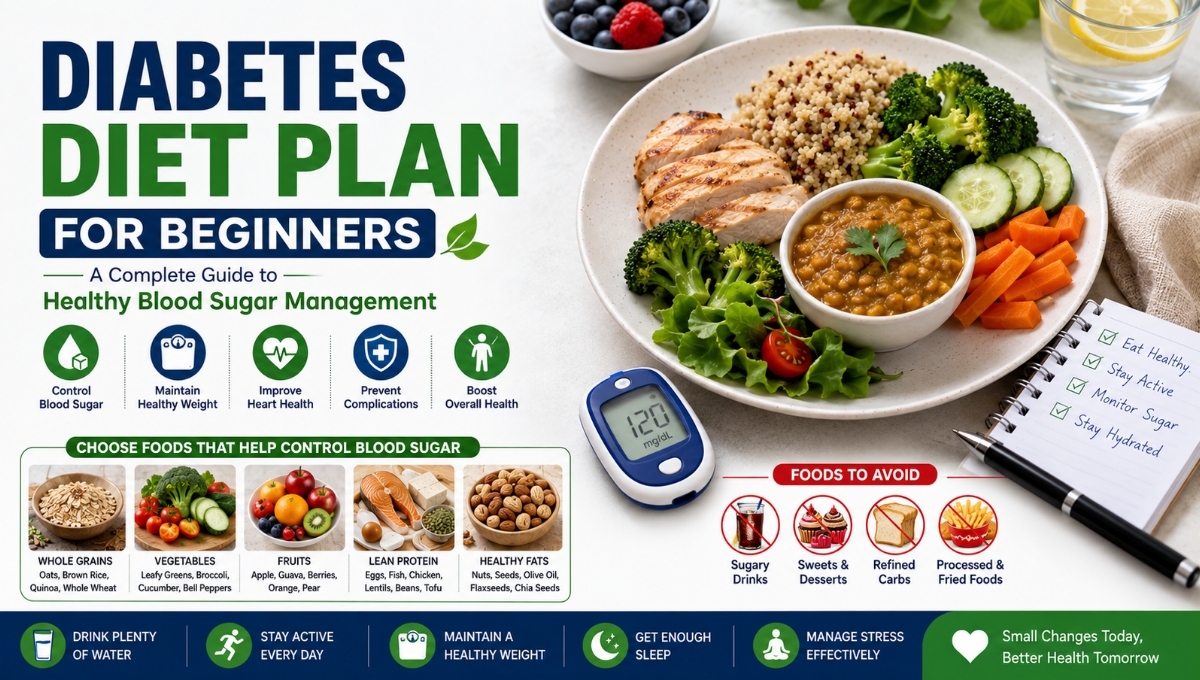
Best Foods for Diabetes
Whole Grains
Whole grains provide fiber and help slow the absorption of sugar.
Examples:
- Oats
- Brown rice
- Whole wheat bread
- Quinoa
These foods are excellent additions to a Diabetes Diet Plan for Beginners.
Green Vegetables
Non-starchy vegetables are low in calories and carbohydrates.
Healthy choices include:
- Spinach
- Broccoli
- Cabbage
- Cucumber
- Bell peppers
Vegetables should occupy a large portion of your daily meals.
Fruits
Fruits contain natural sugars but also provide fiber and nutrients.
Good options include:
- Apple
- Guava
- Orange
- Pear
- Berries
Consume fruits in moderation as part of a balanced Diabetes Diet Plan for Beginners.
Lean Protein
Protein helps control hunger and stabilize blood sugar.
Healthy sources include:
- Eggs
- Fish
- Chicken breast
- Lentils
- Beans
- Tofu
Protein should be included in every meal.
Healthy Fats
Healthy fats support heart health and provide long-lasting energy.
Sources include:
- Almonds
- Walnuts
- Chia seeds
- Flaxseeds
- Olive oil
These fats are beneficial in a diabetes-friendly diet.
Foods to Avoid
Certain foods may cause rapid spikes in blood sugar.
Sugary Beverages
Avoid:
- Soft drinks
- Sweetened juices
- Energy drinks
Refined Carbohydrates
Limit:
- White bread
- White rice
- Pastries
- Cakes
Processed Foods
Highly processed foods often contain excess sugar, unhealthy fats, and sodium.
Excess Sweets
Reduce consumption of:
- Candy
- Chocolate
- Ice cream
- Desserts
Avoiding these foods is an important part of a Diabetes Diet Plan for Beginners.
Sample Diabetes Diet Plan for Beginners
Early Morning
- 1 glass warm water
- 5 soaked almonds
- 2 walnuts
Breakfast
- Vegetable oats
- Boiled eggs
- Unsweetened tea
Mid-Morning Snack
- Apple or guava
Lunch
- Whole wheat roti
- Mixed vegetables
- Dal
- Salad
Evening Snack
- Roasted chickpeas
- Green tea
Dinner
- Grilled fish or paneer
- Vegetables
- Small portion of brown rice
Before Bed
- Warm milk without added sugar
This simple Diabetes Diet Plan for Beginners can help maintain balanced blood sugar levels.
Portion Control Matters
Even healthy foods can raise blood sugar when consumed in large quantities.
Tips include:
- Use smaller plates
- Eat slowly
- Avoid overeating
- Follow consistent meal timings
Portion control is a key element of every Diabetes Diet Plan for Beginners.
Importance of Fiber
Fiber slows digestion and helps regulate blood sugar.
High-fiber foods include:
- Oats
- Beans
- Lentils
- Fruits
- Vegetables
Most diabetes-friendly diets emphasize fiber-rich foods.
Stay Hydrated
Water plays an important role in overall health.
Benefits include:
- Better digestion
- Improved metabolism
- Blood sugar support
Choose:
- Water
- Herbal tea
- Lemon water
Avoid sugary drinks whenever possible.
Exercise and Diabetes
Physical activity improves insulin sensitivity and supports healthy blood sugar levels.
Good options include:
- Walking
- Cycling
- Yoga
- Swimming
Aim for at least 30 minutes of activity most days of the week.
Combining exercise with a Diabetes Diet Plan for Beginners provides better results.
Healthy Snacking Tips
Smart snacks can prevent hunger and blood sugar fluctuations.
Healthy snack options:
- Nuts
- Roasted seeds
- Greek yogurt
- Boiled eggs
- Fresh vegetables
Avoid processed snack foods whenever possible.
Weight Management and Diabetes
Maintaining a healthy weight can significantly improve blood sugar control.
Benefits include:
- Better insulin sensitivity
- Reduced diabetes complications
- Improved heart health
A balanced Diabetes Diet Plan for Beginners supports healthy weight management.
Common Mistakes Beginners Should Avoid
Skipping Meals
Skipping meals may cause blood sugar fluctuations.
Eating Large Portions
Overeating can increase glucose levels.
Drinking Sugary Beverages
Liquid sugar is absorbed very quickly.
Ignoring Physical Activity
Exercise is just as important as diet.
Following Extreme Diets
Sustainable eating habits are more effective.
Benefits of Following a Diabetes Diet Plan
A proper Diabetes Diet Plan for Beginners can help:
- Control blood sugar
- Improve energy levels
- Maintain healthy weight
- Reduce health complications
- Improve heart health
- Support long-term wellness
Consistency is the key to success.
Lifestyle Tips for Better Diabetes Management
Get Enough Sleep
Aim for 7–9 hours of quality sleep.
Manage Stress
Try:
- Meditation
- Deep breathing
- Yoga
Monitor Blood Sugar
Track glucose levels regularly as advised by healthcare professionals.
Follow Medical Advice
Continue medications and regular health checkups.
These habits complement a successful Diabetes Diet Plan for Beginners.
Conclusion
Following a proper Diabetes Diet Plan for Beginners is one of the most effective ways to manage blood sugar levels and maintain overall health. By choosing nutrient-rich foods, controlling portions, staying active, drinking enough water, and avoiding excess sugar, beginners can successfully manage diabetes and improve their quality of life.
Remember that diabetes management is a long-term journey. Small daily improvements can create significant health benefits over time. Start with simple changes, stay consistent, and focus on building healthy habits that support lifelong wellness.
Also Read
Healthy Lifestyle Habits for Beginners: A Complete Guide to Living a Healthier Life
How to Lose Weight Naturally at Home: A Complete Guide for Healthy and Sustainable Weight Loss
Health Insurance Plans: Why It Is Essential in Today’s Time 2026