Healthcare expenses are increasing rapidly every year. A medical emergency can happen at any time, and arranging funds during such situations can be stressful. This is where Cashless Health Insurance becomes extremely valuable. It allows policyholders to receive medical treatment without making immediate payments from their own pocket at network hospitals.
Today, many families prefer Cashless Health Insurance because it offers convenience, financial security, and peace of mind during emergencies. Instead of worrying about hospital bills, patients can focus on recovery while the insurance company settles eligible expenses directly with the hospital.
In this article, we will discuss everything you need to know about Cashless Health Insurance, including its benefits, features, eligibility, claim process, and tips for choosing the right plan.
What Is Cashless Health Insurance?
Cashless Health Insurance is a type of health insurance facility where the insurance company directly pays the hospital bills to the network hospital for covered treatments.
This means that the insured person does not have to pay the full hospitalization expenses upfront.
The cashless facility is available only at hospitals that are part of the insurer’s network.
Why Cashless Health Insurance Is Important
Medical emergencies often occur unexpectedly. During such situations, arranging large amounts of money can be difficult.
Cashless Health Insurance helps by:
- Reducing financial stress
- Providing immediate treatment access
- Eliminating the need for large upfront payments
- Offering peace of mind during emergencies
It ensures that patients receive timely medical care without worrying about finances.
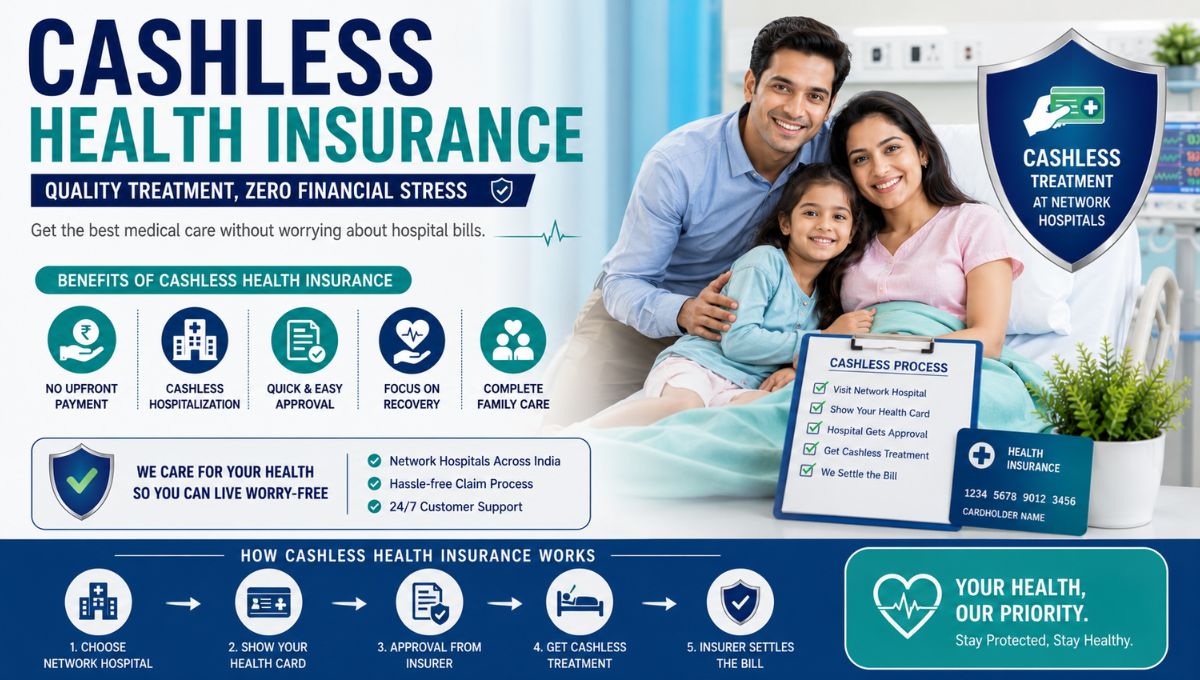
How Cashless Health Insurance Works
The process is simple:
Step 1: Choose a Network Hospital
Visit a hospital that is part of the insurance provider’s network.
Step 2: Show Insurance Details
Provide your health insurance card and policy details.
Step 3: Hospital Sends Request
The hospital submits a pre-authorization request to the insurance company.
Step 4: Approval
Once approved, eligible medical expenses are covered directly by the insurer.
Step 5: Treatment
The patient receives treatment without making major upfront payments.
This makes Cashless Insurance one of the most convenient healthcare solutions available today.
Benefits of Cashless Health Insurance
1. No Immediate Financial Burden
One of the biggest advantages of Cashless Insurance is that patients do not need to arrange large sums of money during hospitalization.
This is especially important during emergencies.
2. Quick Access to Treatment
Because payment concerns are reduced, treatment can begin without unnecessary delays.
3. Peace of Mind
Families can focus on patient recovery instead of managing hospital bills.
4. Cashless Hospitalization
Eligible expenses are settled directly between the insurance company and the hospital.
5. Better Financial Planning
Medical emergencies do not significantly affect savings or investments.
Features of Cashless Health Insurance
Modern Cashless Health Insurance plans often include:
- Hospitalization coverage
- ICU charges
- Surgery expenses
- Ambulance services
- Diagnostic tests
- Doctor consultation fees
- Daycare procedures
- Pre and post hospitalization expenses
Coverage varies depending on the insurer and policy selected.
Types of Cashless Health Insurance Plans
Individual Health Insurance
Covers a single individual under the policy.
Family Floater Plans
Provides coverage for multiple family members under one plan.
Senior Citizen Plans
Designed specifically for older adults.
Critical Illness Plans
Offers protection against major illnesses such as cancer, stroke, and heart disease.
Group Health Insurance
Provided by employers to employees.
Who Should Buy Cashless Health Insurance?
Almost everyone can benefit from Cashless Health Insurance, including:
- Young professionals
- Married couples
- Families with children
- Senior citizens
- Self-employed individuals
The earlier you purchase health insurance, the better the long-term benefits.
What Expenses Are Covered?
Most Cashless Health Insurance policies cover:
Hospital Room Charges
Expenses for hospital accommodation during treatment.
Surgery Costs
Costs associated with approved medical procedures.
ICU Expenses
Coverage for intensive care unit treatment.
Medical Tests
Diagnostic procedures related to covered treatments.
Doctor Consultation
Fees charged by doctors during hospitalization.
Ambulance Charges
Emergency transportation expenses within policy limits.
What Is Not Covered?
Common exclusions may include:
- Cosmetic procedures
- Experimental treatments
- Non-medical expenses
- Self-inflicted injuries
- Certain waiting-period conditions
Always read policy documents carefully.
Network Hospitals and Their Importance
Network hospitals play a major role in Cashless Health Insurance.
Benefits of network hospitals include:
- Cashless treatment facility
- Faster claim processing
- Reduced paperwork
- Better coordination between insurer and hospital
Before purchasing a policy, check the insurer’s hospital network in your city.
Cashless vs Reimbursement Health Insurance
Cashless Health Insurance
- Direct payment by insurer
- Less financial burden
- Faster treatment process
- Available at network hospitals
Reimbursement Insurance
- Patient pays hospital bill first
- Claim submitted later
- Reimbursement after approval
Most people prefer Cashless Health Insurance because it provides immediate financial relief.
How to Choose the Best Cashless Health Insurance Plan
Check Network Hospitals
Choose a policy with a large hospital network.
Evaluate Coverage Amount
Select adequate coverage based on healthcare costs.
Compare Premiums
Balance affordability with sufficient protection.
Review Claim Settlement Ratio
A higher claim settlement ratio indicates reliability.
Understand Waiting Periods
Review policy conditions before purchasing.
Advantages of Buying Health Insurance Early
Purchasing Cashless Health Insurance at a younger age offers several benefits:
- Lower premiums
- Better policy options
- Easier approvals
- Longer coverage period
- Financial security
Early planning helps avoid future complications.
Common Mistakes to Avoid
Choosing Low Coverage
Medical costs continue to rise, making adequate coverage essential.
Ignoring Policy Terms
Always understand exclusions and waiting periods.
Not Checking Hospital Network
A strong network improves access to cashless treatment.
Delaying Health Insurance Purchase
Waiting too long may increase premiums and reduce options.
Online Cashless Health Insurance
Today, many people purchase Cashless Health Insurance online.
Benefits include:
- Easy comparison
- Instant policy issuance
- Paperless process
- Lower premiums
- Quick renewals
Online platforms make buying health insurance more convenient than ever.
Future of Cashless Health Insurance
The healthcare industry continues to evolve rapidly.
Future trends include:
- Digital claim processing
- Faster approvals
- AI-powered customer support
- Expanded hospital networks
- Improved wellness benefits
These advancements are making Cashless Health Insurance more accessible and efficient.
Conclusion
Cashless Health Insurance is one of the most important financial tools for managing healthcare expenses. It provides immediate access to medical treatment without requiring large upfront payments during emergencies. With rising healthcare costs, having the right health insurance policy can protect your savings and ensure quality medical care for you and your family.
Whether you are a young professional, a parent, or a senior citizen, investing in Cashless Health Insurance can provide financial security, convenience, and peace of mind. By choosing the right plan and understanding its features, you can ensure better healthcare protection for the future.
Also Read
How to Remove Pimples Naturally: Complete Guide to Clear and Healthy Skin
Healthy Lifestyle Habits for Beginners: A Simple Guide to Better Health
Affordable Health Insurance: Smart Protection for Every Family